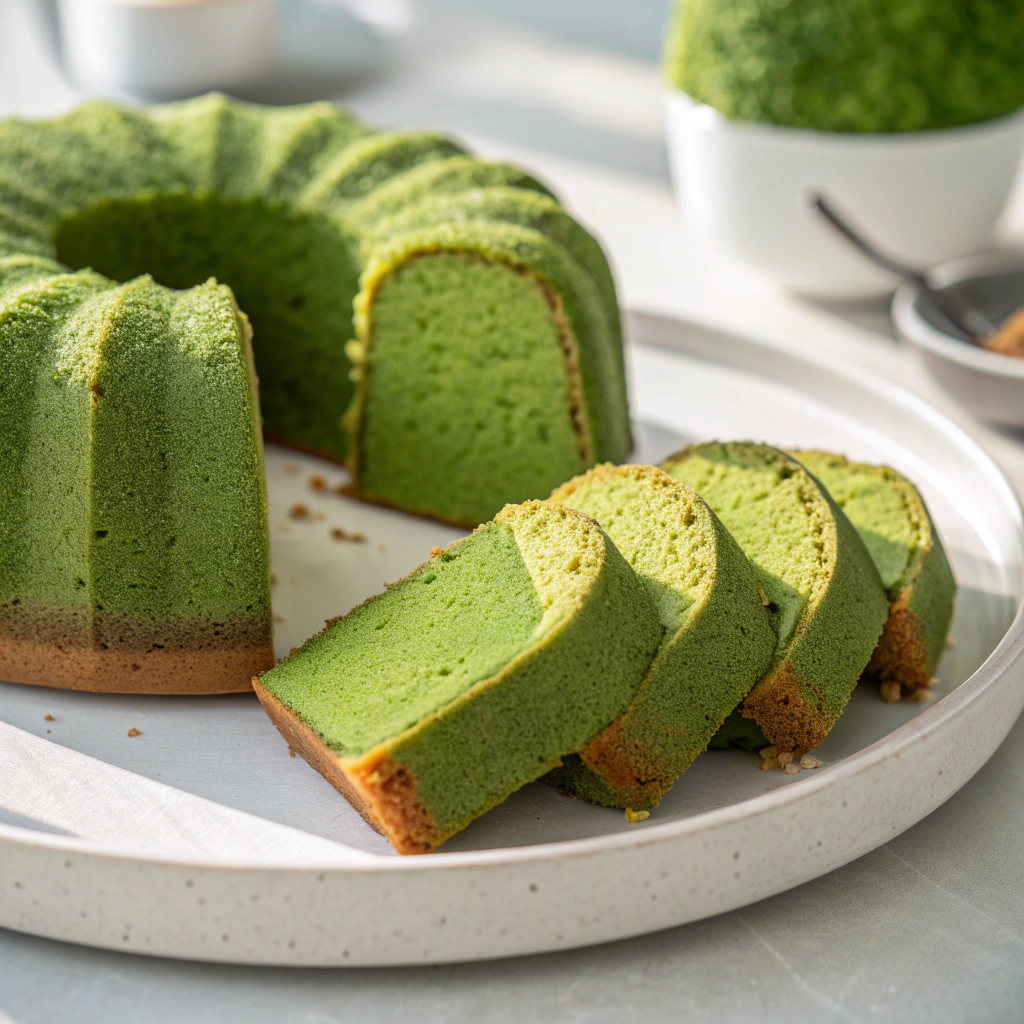
There is something profoundly soothing about the vibrant green hue of a freshly sliced Matcha Pound Cake. I remember the first time I baked this for a quiet afternoon tea with a dear friend; the earthy, toasted aroma of the matcha filled the house, instantly creating a sense of calm. This recipe, shared by Emma, is a beautiful fusion of a classic, buttery pound cake and the refined elegance of Japanese green tea. It has since become my favorite “reset” recipe—the kind you bake on a Sunday afternoon to ground yourself for the week ahead. Whether you’re a tea connoisseur or just looking for a unique twist on a classic loaf, this cake is a gentle, sweet invitation to slow down.
Prep Time: 15 min | Cook Time: 55 min | Total Time: 1 hour 10 min
Key Ingredients
- All-Purpose Flour: 1 ¾ cups (220g), the sturdy base of our pound cake.
- Matcha Powder: 1 ½ tablespoons (Use culinary grade or higher for that iconic emerald color).
- Baking Powder: 1 teaspoon, for a perfect, gentle lift.
- Salt: ½ teaspoon, to balance the sweetness.
- Unsalted Butter: 1 cup (226g), must be softened to room temperature for proper creaming.
- Granulated Sugar: 1 cup (200g).
- Light Brown Sugar: ½ cup (100g), adds a hint of caramel moisture.
- Large Eggs: 4, room temperature (to prevent the batter from curdling).
- Vanilla Extract: 1 teaspoon.
- Whole Milk: ½ cup (120ml), provides a tender crumb.
Step-by-Step Instructions
- Preheat and Prepare: Set your oven to 350°F (175°C). Grease a 9×5-inch loaf pan and line it with parchment paper, leaving an overhang for easy removal.
- Mix Dry Ingredients: Sift the flour, matcha, baking powder, and salt together into a medium bowl. Whisk well; sifting is essential here as matcha tends to clump!
- Cream Butter and Sugars: In a large bowl, beat the butter and both sugars together until the mixture is light, fluffy, and pale (about 3–4 minutes). This aeration is what gives pound cake its famous texture.
- Add Eggs and Vanilla: Incorporate eggs one at a time, beating well after each. Stir in the vanilla extract.
- Alternate Wet and Dry: Add the dry ingredients in three parts, alternating with the milk (Dry-Milk-Dry-Milk-Dry). Mix on low speed until just combined—do not overmix or the cake will be tough.
- Bake: Pour into the pan and smooth the top. Bake for 50–60 minutes. Pro Tip: If the top browns too quickly, loosely “tent” the pan with aluminum foil for the final 15 minutes.
- Cool and Serve: Let the cake rest in the pan for 10 minutes before moving it to a wire rack. Cooling completely is key for the best flavor development!
Serving Suggestions
- The Minimalist: A simple dusting of powdered sugar to highlight the green color.
- The Indulgent: Serve a thick slice with a dollop of lightly sweetened whipped cream.
- The Tea House Style: Pair with a scoop of black sesame or vanilla bean ice cream.
- The Toasted Slice: Lightly toast a slice and spread with a thin layer of salted butter for breakfast.
Storage & Make-Ahead Tips
- Refrigeration: Wrap tightly in plastic wrap and store at room temperature for up to 3 days, or in the fridge for up to 1 week.
- Freezing: This cake freezes beautifully. Slice it first, wrap individual slices in plastic, and freeze for up to 3 months.
- Make-Ahead: You can bake this cake a day in advance; like many pound cakes, the texture and tea flavor often improve on the second day.
Tips & Tricks
- Sift Your Matcha: Matcha is very fine and prone to static clumping.1 Always sift it with your flour to ensure you don’t end up with bitter green spots in your cake.
- Temperature Matters: If your eggs or milk are cold, they will seize the creamed butter. Warm them to room temperature by placing eggs in warm water and microwaving milk for 10 seconds.
Common Mistakes to Avoid
- Overmixing the Batter: Once the flour goes in, stop as soon as it’s incorporated. Overworking the gluten will turn a tender pound cake into a rubbery loaf.
- Old Matcha: Matcha loses its color and flavor quickly. Check your expiration date; if the powder looks dull or brown, the cake won’t have that vibrant “wow” factor.
Chef’s Advice
- Flavor Variations: Add the zest of one lemon to the sugar during the creaming step for a bright “Matcha-Lemonade” profile.
- Ingredient Substitutions: You can use a neutral oil (like grapeseed) for half of the butter if you want an even moister, springier crumb, though you will lose some of that classic butter flavor.
- Presentation Ideas: Glaze the cake with a simple white chocolate ganache to create a stunning color contrast against the green cake.
History and Cultural Significance
The “Pound Cake” originated in Northern Europe in the 1700s, traditionally using a pound each of flour, butter, sugar, and eggs.2 This Japanese-inspired version replaces the heavy European profile with the sophisticated bitterness of Matcha. In Japan, this style of fusion baking is known as Yogashi—Western-style sweets reimagined with Japanese sensibilities and ingredients.
Final Thoughts
Emma’s Matcha Pound Cake is a testament to the beauty of simplicity. It is an elegant, dependable loaf that brings a touch of zen to your kitchen. I can’t wait for you to see that first slice reveal its stunning green interior!
Nutrition Information
| Serving Size | Calories | Protein | Carbs | Fat | Fiber | Sugar |
| 1 slice | 300 | 5g | 38g | 15g | 1g | 22g |
Disclaimer: Nutrition information is estimated using standard online calculation tools and may vary based on ingredients and preparation methods. For accurate dietary advice, consult a qualified nutrition professional.