
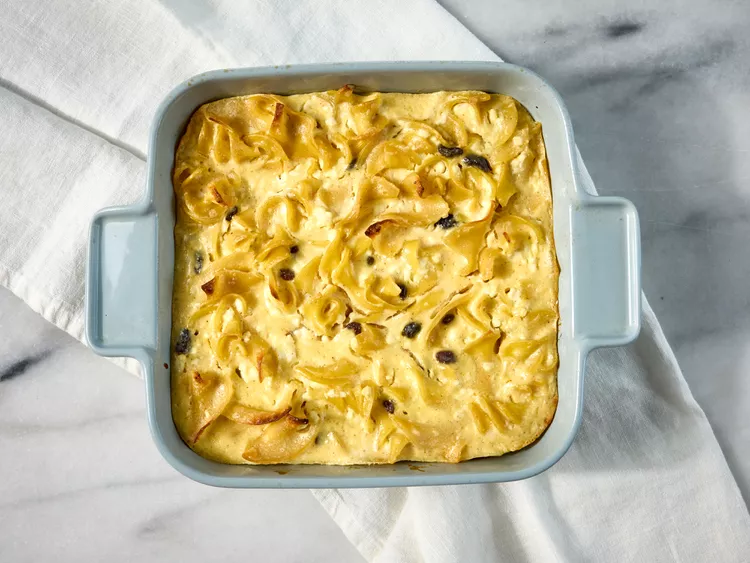
There’s something deeply comforting about traditional kugel that brings back memories of family gatherings and holiday celebrations. This authentic Jewish noodle kugel recipe captures the essence of what you’d find in a classic New York City deli or at your grandmother’s table during the holidays. While countless variations exist today, this sweet noodle pudding stays true to the original—rich, creamy, and studded with plump raisins. Growing up, this was the kugel style my relatives would prepare for every special occasion, and it’s remained unchanged through generations. The combination of cottage cheese, sour cream, and warm spices creates that nostalgic flavor that makes traditional kugel so beloved in Jewish cuisine.
Prep Time: 10 min | Cook Time: 50 min | Total Time: 1 hr
Key Ingredients
- 1 (8 ounce) package wide egg noodles
- 2 cups small curd cottage cheese (full-fat recommended)
- 1½ cups sour cream (full-fat recommended)
- ½ cup white sugar
- ½ cup raisins or golden raisins
- 3 large eggs, beaten
- ½ teaspoon salt
- ¼ teaspoon ground cinnamon
- ⅛ teaspoon ground nutmeg
Substitution Notes: While you can use regular or golden raisins interchangeably, avoid using light or low-fat dairy products as they’ll compromise the authentic rich flavor and creamy texture.
Step-by-Step Instructions
1. Prepare Your Workspace Preheat your oven to 350°F (175°C). Generously grease an 8-inch square baking dish with butter or cooking spray to prevent sticking.
2. Cook the Noodles Bring a large pot of lightly salted water to a rapid boil. Add the wide egg noodles and cook for 7 to 9 minutes until they’re tender but still have a slight bite (al dente). Drain thoroughly and set aside to cool slightly.
3. Create the Creamy Mixture In a large mixing bowl, combine the cottage cheese, sour cream, sugar, raisins, beaten eggs, salt, cinnamon, and nutmeg. Stir until everything is well blended and the mixture is smooth and creamy.
4. Combine Noodles and Mixture Add your cooked and drained noodles to the bowl with the dairy mixture. Gently fold everything together until the noodles are evenly coated. Pour the entire mixture into your prepared baking dish, spreading it out evenly.
5. Bake to Golden Perfection Place the dish in your preheated oven and bake uncovered for about 40 minutes. You’ll know it’s done when the top turns a beautiful golden brown and the edges are slightly crispy. The center should be set but still creamy.
Serving Suggestions
- Traditional Style: Serve warm as a side dish alongside brisket, roasted chicken, or other holiday mains
- Breakfast Treat: Enjoy a square with your morning coffee as a sweet breakfast option
- Dessert Course: Top with a dollop of sour cream or whipped cream and fresh berries for an elegant dessert
- Brunch Star: Cut into smaller squares and serve as part of a holiday brunch spread
- Casual Snack: Serve at room temperature as an afternoon snack with hot tea
Storage & Make-Ahead Tips
Refrigeration: Store leftover kugel in an airtight container in the refrigerator for up to 4 days. The flavors actually deepen and improve after a day or two.
Freezing: This traditional kugel freezes beautifully! Wrap individual portions or the entire baked kugel tightly in plastic wrap, then aluminum foil. Freeze for up to 3 months. Thaw overnight in the refrigerator before reheating.
Reheating: Warm refrigerated kugel in a 325°F oven for 15-20 minutes, or microwave individual portions for 1-2 minutes. You can also enjoy it cold straight from the fridge.
Make-Ahead Instructions: Assemble the entire kugel up to 24 hours in advance, cover tightly with plastic wrap, and refrigerate. When ready to bake, remove from the fridge 30 minutes before baking and add 5-10 minutes to the baking time.
Tips & Tricks
Use Full-Fat Dairy: Don’t be tempted to use light versions of sour cream or cottage cheese. The richness of full-fat dairy is essential for achieving that authentic, creamy texture and deep flavor that makes traditional kugel so special.
Don’t Overcook the Noodles: Since the noodles will continue cooking in the oven, aim for just tender. Overcooked noodles can result in a mushy kugel rather than one with pleasant texture.
Let It Rest: Allow the kugel to cool for 10-15 minutes after removing it from the oven. This helps it set properly and makes cutting clean squares much easier.
Common Mistakes to Avoid
- Using low-fat dairy products – This results in a watery, less flavorful kugel that doesn’t capture the traditional richness
- Overbaking – Watch carefully during the last 10 minutes; you want golden brown, not dark brown or burnt edges
- Skipping the salt – Even though this is a sweet kugel, the salt balances the sugar and enhances all the flavors
- Not greasing the pan well – This leads to stuck-on edges and difficulty serving neat portions
- Overmixing after adding noodles – Gentle folding preserves the noodle integrity; aggressive stirring can break them down
Chef’s Advice
Flavor Variations:
- Add 1 teaspoon of vanilla extract to the dairy mixture for extra depth
- Include ½ cup of chopped walnuts or pecans for added crunch
- Try dried cranberries or chopped dried apricots instead of raisins for a different flavor profile
- Sprinkle the top with a cinnamon-sugar mixture before baking for extra sweetness and crunch
Ingredient Substitutions:
- Farmer’s cheese can replace cottage cheese for a denser texture
- Greek yogurt can substitute for up to half the sour cream if you prefer a tangier flavor
- Honey or maple syrup can replace white sugar (use ⅓ cup as they’re sweeter)
Presentation Ideas:
- Dust the top with powdered sugar before serving for an elegant finish
- Garnish individual servings with fresh mint leaves
- Serve in the baking dish family-style for a more rustic, homey presentation
Scaling Up: To make enough for a larger crowd, multiply all ingredients by 1½ and use a 9×13-inch baking pan. The baking time will increase by about 10-15 minutes.
History and Cultural Significance
Kugel, which means “sphere” or “ball” in Yiddish, has been a cornerstone of Ashkenazi Jewish cuisine for centuries. Originally a savory dish in medieval Germany, kugel evolved over time as Jewish communities migrated and adapted recipes to available ingredients. The sweet noodle version became particularly popular in Eastern European Jewish communities and later in America, especially among New York’s Jewish population.
This traditional kugel was often served on Shabbat and Jewish holidays, symbolizing abundance and celebration. The dish represents the blending of humble ingredients—noodles, dairy, and eggs—into something extraordinary, reflecting the Jewish value of making the most of what you have. In many families, kugel recipes are treasured heirlooms passed down through generations, with each family claiming their version is the “authentic” one. The debate between sweet versus savory kugel enthusiasts continues to this day at holiday tables across the world.
Final Thoughts
This traditional Jewish noodle kugel is more than just a recipe—it’s a connection to heritage, family, and cherished memories. Whether you’re making it for Rosh Hashanah, Passover, a Shabbat dinner, or simply because you’re craving that nostalgic comfort food, this classic version delivers every time. The creamy texture, sweet flavor, and warm spices create a dish that’s both humble and special.
Don’t be intimidated if you’ve never made kugel before. This recipe is wonderfully forgiving and perfect for beginners. Give it a try, and you’ll understand why this dish has remained beloved for generations. Your kitchen will fill with the most wonderful aroma, and that first warm bite will transport you straight to bubbe’s dining room table.
Nutrition Information
| Serving Size | Calories | Protein | Carbs | Fat | Fiber | Sugar |
|---|---|---|---|---|---|---|
| 1 serving (⅛ of recipe) | 364 | 15g | 44g | 15g | 1g | 20g |
Additional Nutrition Details: Saturated Fat 8g | Cholesterol 121mg | Sodium 429mg | Vitamin C 1mg | Calcium 110mg | Iron 2mg | Potassium 281mg
Disclaimer: Nutrition information is estimated using standard online calculation tools and may vary based on ingredients and preparation methods. For accurate dietary advice, consult a qualified nutrition professional.
Yield: 1 (8-inch) square kugel | Servings: 8